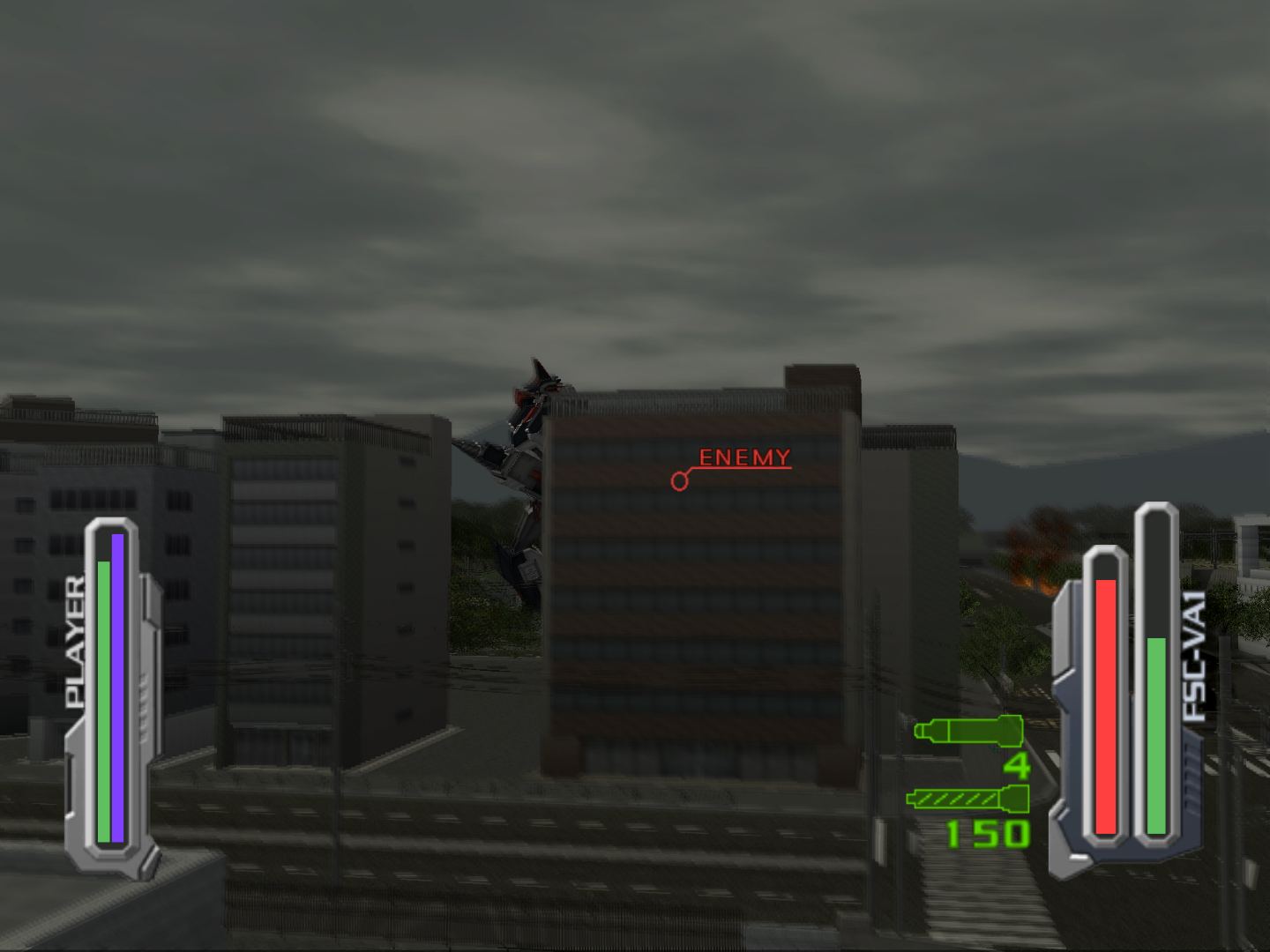
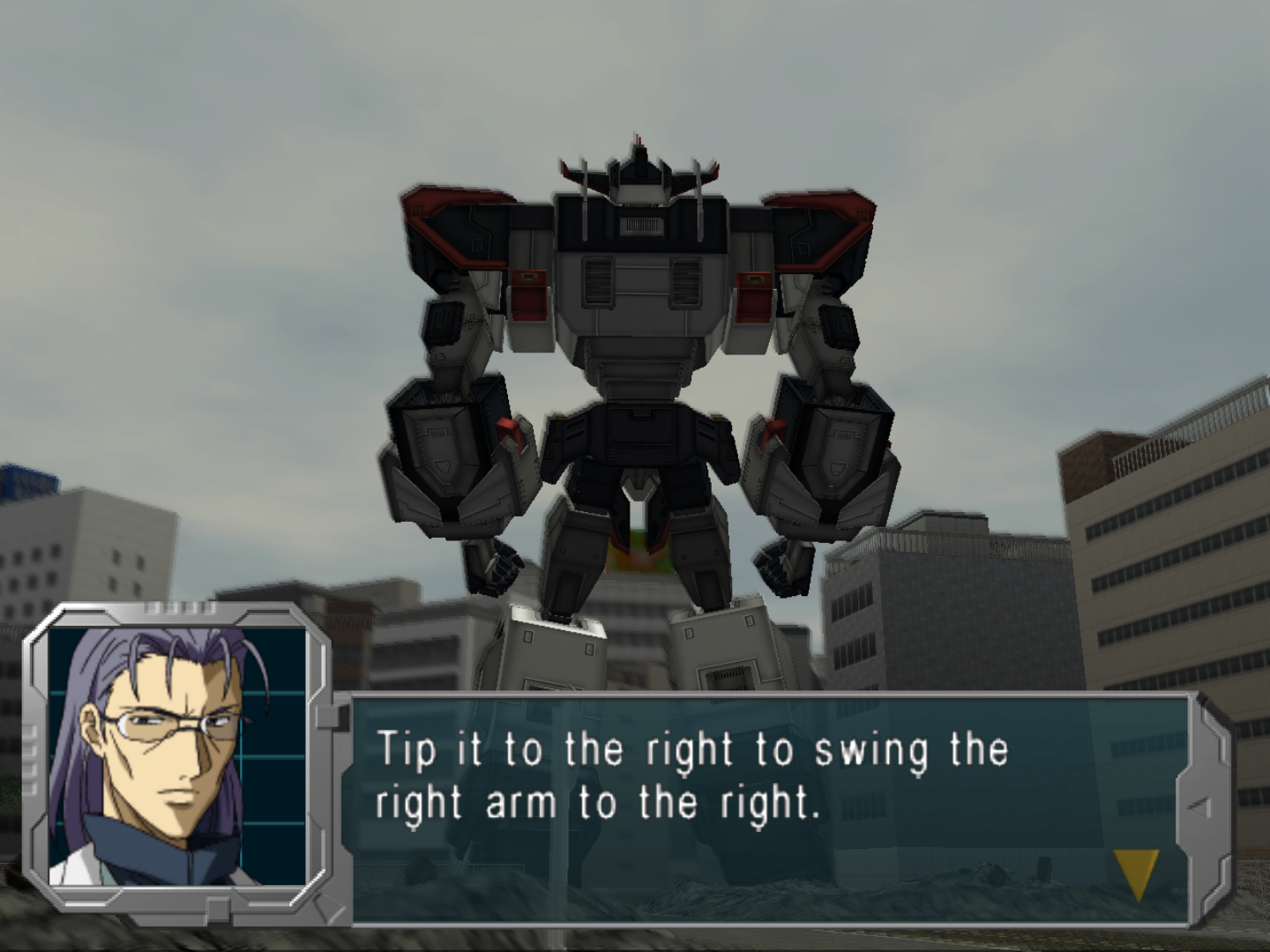
BryRecently I learned about the existence of a hidden gem called Robot Alchemic Drive, thanks to YouTube compilations of Nanao's suffering (one of the main characters) or clips of the protagonist randomly hit by a car. Released in 2002 on PlayStation 2 and developed by Sandlot, later known from the Earth Defense Force series. RAD is an absolute goldmine of unintended comedy, but below the completely butchered English localization and one of the worst voice acting I've ever heard, there's a really enjoyable game. The beginning is kinda sluggish however, mostly due to the mission structure: news report about what's going on → characters talking about what's going on → the actual gameplay that takes a few minutes at most → the news report section again with a summary of how much of the city was destroyed during the fight with an alien mecha → buying upgrades → saving → entering the new mission → repeat. So almost half of the time you spend watching cutscenes, reading visual novel sections where characters repeat the same information that we already know over and over and over again, and navigating the main menu, instead of playing. I almost dropped it after a few first missions due to that, but I'm glad I didn't, because when I finally got used to this gameplay structure, I got really hooked. In RAD we aren't piloting our mecha robot, called Meganite, from the inside. The whole action is observed from the main character's eyes, so one of the important parts of the mission is to position ourselves in a place where nothing will obstruct our view. So sometimes I had fights where everything I saw was the wall of a random building. Also, the fact that we're talking about a PlayStation 2 game, with tank controls, doesn't help. Every time when our Meganite rotated, I had to relearn the correlation between its in-game position and the dpad's arrows.
At the beginning my strategy was to just destroy the buildings that blocked the view, but the developers were prepared for that. After a few missions they introduced a system that evaluates how badly we did based on how many buildings we accidentally demolished during the mission. The less damage we made, the better prizes we get. There are special buildings, like hospital, city hall, or soccer stadium, that when destroyed, add 5 billion yen to the damage estimate. Places where Nanao works, like bakery, café, and grocery store, are also worth 5 billion yen each... somehow. Both of these aspects, and the fact that every single building on the map is destructible, sound really unique, but this is where MobyGames misled me. On the list of titles produced by Sandlot, they show Robot Alchemic Drive as their first game. Which, I later discovered, is incorrect. In reality, RAD is their second game. Three years earlier, in 1999, they released Remote Control Dandy on PlayStation 1. The title tells you everything about the core mechanic. It's also a game about mechas fighting each other, with the same remote-control perspective and evaluation based on destruction costs. Even the robots animations are the same. So RAD is a direct gameplay successor on a more modern console. Below the abysmal writing, I would say there are genuinely interesting concepts in the story. The whole premise is about the Nectar Barrier - the energy in space that kills any biological life trying to leave its home planet, so humanity is trapped on Earth without any option to leave. The game raises worries about overpopulation, especially when you don't have an option to colonize other planets. Humanity and the Volgara (the alien mecha robots who are our enemies) found the same solution to the problem, but in different ways - we built huge robots to send them into space, they evolved into huge robots, to fly into space. A plot based on the fact that, not just Poland, but the entire human civilization "cannot into space," the environment that basically defines sci-fi as a genre, is something I didn't see anywhere else.
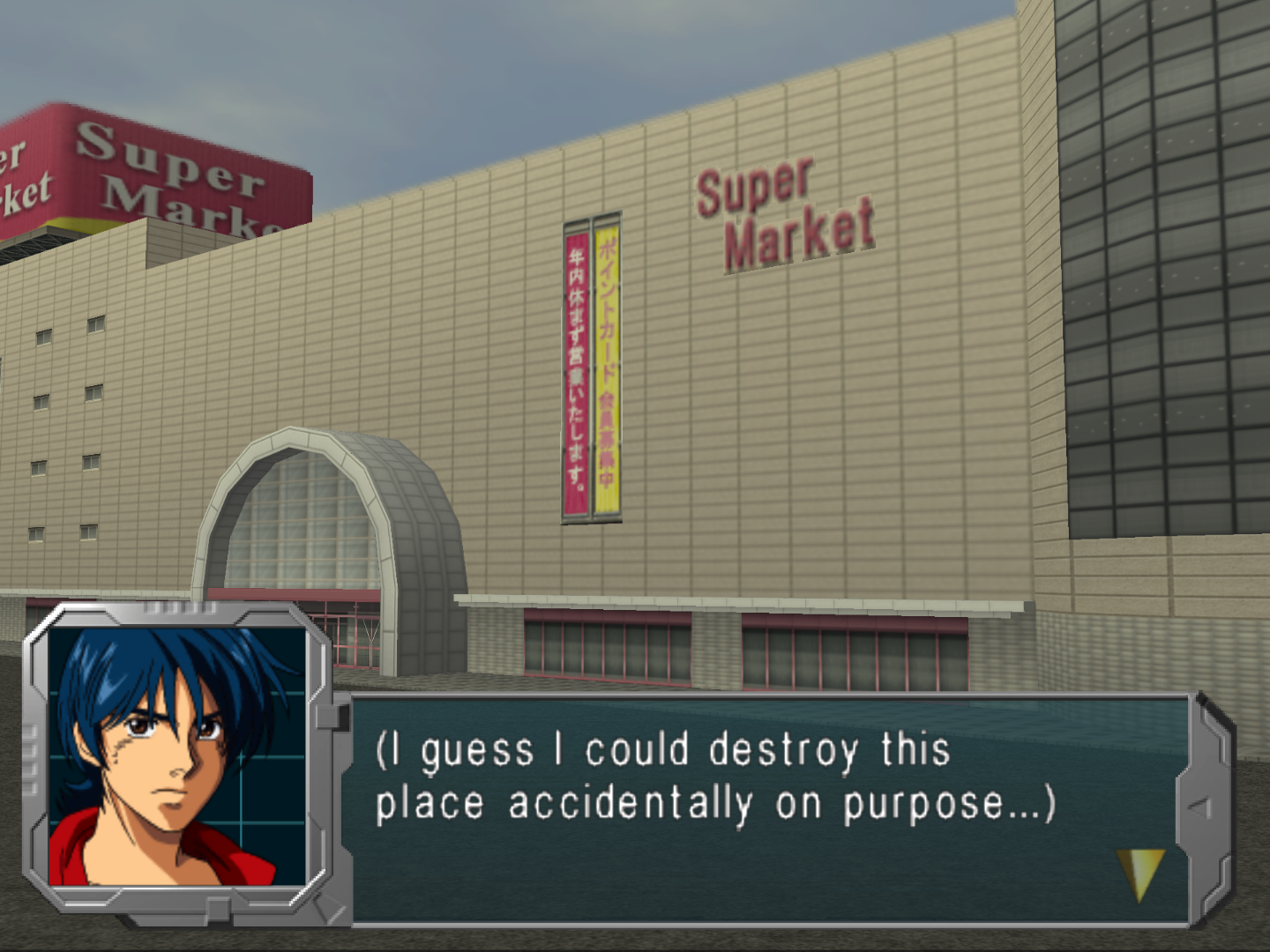
But let's look on the writing, by using this dialogue as the example: - Dr. Wiltz: You know of Nectar Radiance, correct? The life-destroying rays that drift in space. No living thing can survive it. Nectar Radiance prevents living organisms from exploring space. (...) - Ellen: Yeah, I know about the deadly Nectar Radiance. I learned about it in school. These six sentences are everything what's wrong with the narration in this game. They never use replacement words. Nectar Radiance is mentioned three times in two short lines of text. Paraphrasing Britney Spears, the repetition is killing me. Every single dialogue is written this way. Almost every single piece of information is explained multiple times. Every time when Dr. Wiltz (the scientist who helps our character) said something important, our protagonist repeated that information with a shocked face. Out of curiosity, I checked the original Japanese dubbing and who could have guessed, it's just proper voice acting. By the way, some of the original actors later got pretty big roles, like C.C. in Code Geass (played by Yukana, who voiced RAD's protagonist) or Kakashi Hatake in Naruto (played by Kenichi Suzumura, also the RAD's protagonist). But to my surprise, I have to admit that I prefer the English performance of Dr. Wiltz... which is even more surprising because the developers hired an already famous talent for him - Juurouta Kosugi, who for example played Jotaro Kujo in the 1993 adaptation of Jojo's Bizzare Adventure. In Japanese, Dr. Wiltz has a very deep, manly voice, while in English he has a much higher register that, for me, suits him better. This and a really strong German accent that sounds like self-parody, which has its B-movie charm, not gonna lie. Which also creates a more memorable performance than in original, thanks to it's low quality. Speaking of English "voice actors," according to IMDB, almost all of them did only two roles in their entire careers - in RAD, in Grandia Xtreme and in nothing else. I can't say it surprises to me. Probably most people who recognize Robot Alchemic Drive, immediately think about Nanao. This 17-year-old girl's story is the most egregious example of the death of one man is a tragedy, the death of millions is a statistic that I've ever seen. I will just quote one YouTube comment that summarized the whole thing perfectly: - I like how Nanao is supposed to be, the way the wiki says, a face for the civillains whose lives are being ruined by the war, and she does do it pretty well herself - the loss of a family member, inflation, losing jobs, all while having to deal with the danger of war itself - but since she's practically the only character with this purpose, it quickly turns into just her suffering lmao. The game (and the characters, and the player) worry more about her specifically than about eg. All the people who found work at that supermarket. You could call it a fault of the writing, but the result is also very funny. by @end_orfino The mentioned supermarket is the on-the-spot example. In one mission Nanao says she found a new job in a local grocery store, but a newly opened supermarket takes all the customers. So as a solution to the issue, our protagonists decide:
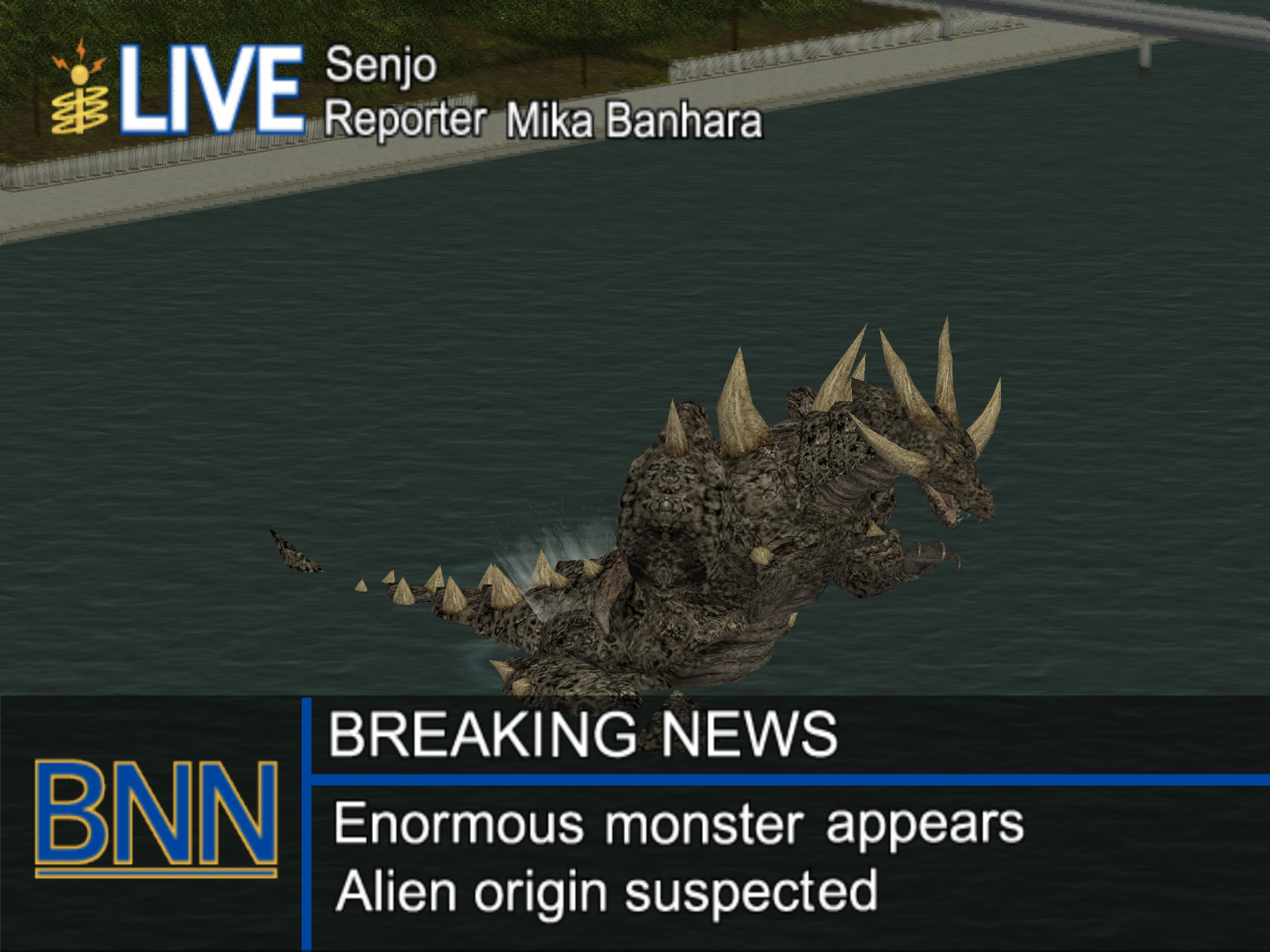
As two more users on YouTube summarized the whole situation: - The player character getting paid billions of yen to pilot a mecha, and then being willing to destroy an entire supermarket just so Nanao can keep a dead end job is hilarious. Like the extent of help is precisely calculated to keep her life at the fine balance between hopelessness and abject misery. by @PURENT - I love how this game gives you the option to either help Nanao by committing acts of mass terrorism, or to absolutely ruin her life by flattening every job she’s ever had and everyone she’s ever loved… instead of just, like, giving her some money or something. by @ababyharpseal Nanao is important because she's a named character that we care about. The unnamed people who worked in the supermarket aren't important, they're nameless NPCs. By destroying their workplace, we put them into an even worse position than Nanao is in now, because she at least has a job. We redistributed misery from one person we know to an unknown number of people we don't. The suffering of Nanao is a tragedy, the suffering of the rest of Senjo's (the fictional city where the game takes place) citizens is a statistic. Now, let's talk about Dantarion, the Godzilla-like creature that attacks our city in one of the later missions. I mean, just look at it:
Do you remember the Nectar Barrier? The space energy that kills any biological life forms? The reason why Volgara evolved into machines and humanity built giant robots to explore cosmic space for us? Yeah, that thing. And now we have a big alien kaiju monster which is not a robot at all. Does they even bother to explain how it's possible that the Volgara brought a biological life form from their home planet to Earth through space that's supposed to kill anything biological? Obviously not... unless you look into the history of how RAD was made. Originally it was supposed to be a Tekkōki Mikazuki game that even got a demo, but it was cancelled. And in this game we were fighting kaiju by using giant robots. Even one of the Volgara is basically just a slightly remodeled robot from the demo. So they also had a model of a Godzilla-like creature and probably decided "why not use it?" I mean, the fact that it contradicts the whole Nectar Barrier lore you established in RAD could be a reason not to, but who cares apparently. This is optimal asset management, nothing is wasted. But it's sad that they remodeled it into a painfully generic Godzilla rip-off, when the original design was a trurly unique watermelon-like monster. And disclaimer: this is just my theory. But if it's not the reason why Dantarion appeared in the game, then... I mean...?? But let's make a game theory™ based on what was and what wasn't said in the story. So how could Volgara bring a 40-meter-high monster to Earth? I will say, what if they didn't bring it in the physical sense? DNA can be stored as digital data. If Volgara evolved from biological to mechanical life forms, as the game explicitly mentions to us a few times, then maybe they're very good at bioengineering. It's never explained as anything more than "they evolved into robots," so in this scenario maybe they also used technology to make sure that evolution process would go as intended. It's mentioned once that they have a dark god in their mythology. You know, dark god, because it's an early 2000s video game, I can't. But anyway, if they have mythology, they probably have a civilization too. So they appeared on Earth where there's plenty of biological matter and they used it to "build" that kaiju from scratch. Additionally, I came up with this bioengineering theory right after the mission with Dantarion, but later the game sort of confirmed what I wrote? Without getting into spoilers, in one of the final missions we have to destroy something that Volgara made. And that thing debris have a weird, red and fleshy, meaty texture. When I saw that, I thought, WTF? Could this be a coincidence? Could RAD be a better game? Obviously. A proper translation, better voice acting and dialogues without constant repetitions. But I think in the long term, it could be a worse outcome than we have now. Why? I would say the fact that it realizes its potential badly is the thing that gives this game pop-cultural immortality. There's always a small, finite number of genre-defining works, for a very simple reason - it's just hard to make something exceptional. Then we have everything in the middle. Works that are good enough. Titles that genuinely realize their potential. They don't do anything badly, but also rarely do anything exceptional. And even if they do, it's often just one element among others that are just good. Works that build the genre catalogue, that gain their fans, but often exist in a cultural relevancy for a few years and get replaced by a new work, probably on the same quality level, solely because they're old and the new thing is new. And finally we have bad titles. Stuff that's remembered for being a failure. People love to return to failed projects after years to look at them from a new perspective. To laugh at how bad they were, to complain about how they didn't fulfill their potential or to analyze simply what went wrong and what we can learn from that. This is why I think why RAD will stay with us. Not as a frontrunner in conversations about retro games or the mecha genre, but still as a title that people mention sometimes. I saw multiple comments like I saw shorts of the shit that's going on in it, so I decided to give it a shot and I had a lot of fun playing it. That's exactly what happened to me. There are posts like Reminder that this game exists or I'm shocked at how much I enjoyed Robot Alchemic Drive (PS2), despite its issues. It's arguably better cultural significance than many just good works could ever have, simply because it sometimes appears in discussions almost 24 years after its release, when many better PS2 games are simply forgotten at this point. What can I say, it brought me a lot of fun while playing, so I really recommend to try it. If you can survive its jankiness, then I think you won't regret it. Oh, btw, what exactly is the titular Alchemic Drive? It's an engine in our Meganite. It's also unfinished and can explode. It's presented as an important plot point, just to never be mentioned again after a single dialogue in the first mission. Advertising space:The Onion® brings you all of the latest news, stories, photos, videos and more from America's finest news source.
|